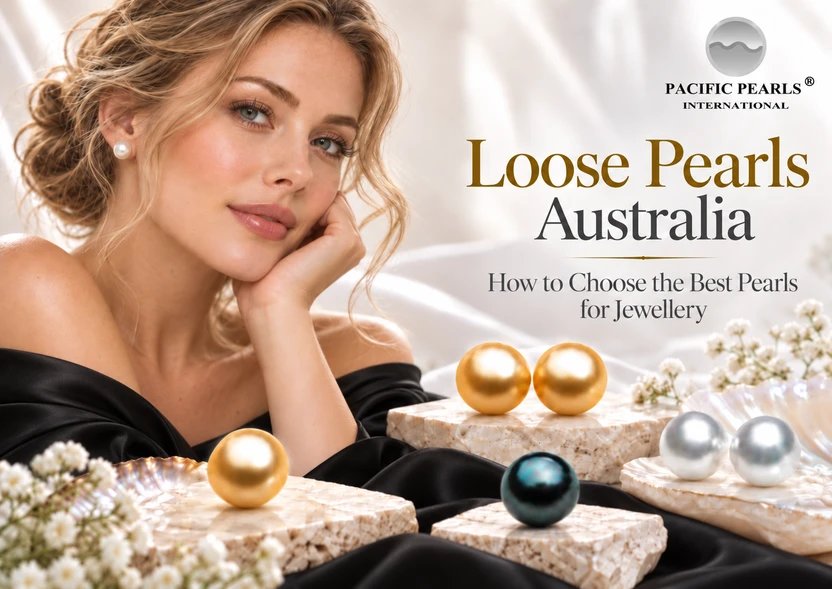
Loose Pearls Australia: How to Choose the Best Pearls for Jewellery?
Posted by Pacific Pearls International on 6th Oct 2026
Pacific Pearls® 30% Off Sale 2026 (selected items only, Code: Q58) 20% Off Storewide! ( Code: R5858 ) Birthday Gifts , Anniversary Gifts , Wedding gifts , Gifts For Wife , Gift for Father , Gift For Yourself , Elegant Pearl Earrings, Necklaces, Pendants, Rings, Bracelets & Loose Pearls, The Perfect Gift for Every Special Woman .
LIMITED-TIME DEAL! 20% Off all Oders :Use Discount Code: R5858 . Hurry! Sale Ends on 17th Oct 2026
Loose pearls give you the freedom to choose exactly the pearl you want before it becomes part of a finished piece of jewellery.
Whether you are looking for a single pearl for a pendant, a matching pair for earrings, or a special pearl for a custom-designed ring, choosing the right loose pearl can make a significant difference to the beauty and character of the finished jewellery.
For Australian buyers, there are many different types of loose pearls available, including Australian South Sea pearls, Tahitian pearls and freshwater pearls. Each has its own appearance, colour, size range and character.
How to choose loose pearls in Australia, what quality factors to compare and which pearl types may be most suitable for different jewellery designs.
What Are Loose Pearls?
Loose pearls are individual pearls or matching pearl pairs that have not yet been permanently set into finished jewellery.
They may be sold:
Undrilled
Half-drilled
Fully drilled
As individual pearls
As matched pairs
In different sizes, shapes and colours
Buying loose pearls gives customers, collectors and jewellery designers more control over the final piece.
Instead of choosing a completed item of jewellery first, you can select the pearl itself based on its lustre, size, colour, shape, surface and overall appearance.
For people creating custom jewellery, this can be especially valuable.
A beautiful pearl can become the centrepiece of a pendant, ring, pair of earrings or another meaningful piece of jewellery.
Why Buy Loose Pearls?
One of the biggest advantages of buying loose pearls is choice.
Pearls are natural gems, and no two are completely identical.
Even pearls of the same type and size may vary slightly in:
Colour
Overtone
Shape
Surface characteristics
Lustre
Choosing a loose pearl allows you to look beyond a standard jewellery design and find a pearl that suits your personal preference.
Some customers may prefer an exceptionally round pearl.
Others may choose a slightly baroque pearl because of its individuality.
Some may want a bright white South Sea pearl, while others may prefer the darker green, silver or peacock overtones often associated with Tahitian pearls.
For jewellery intended as a meaningful gift, choosing the pearl itself can also make the finished piece feel more personal.
Main Types of Loose Pearls Available in Australia
When shopping for loose pearls, one of the first decisions is choosing the type of pearl.
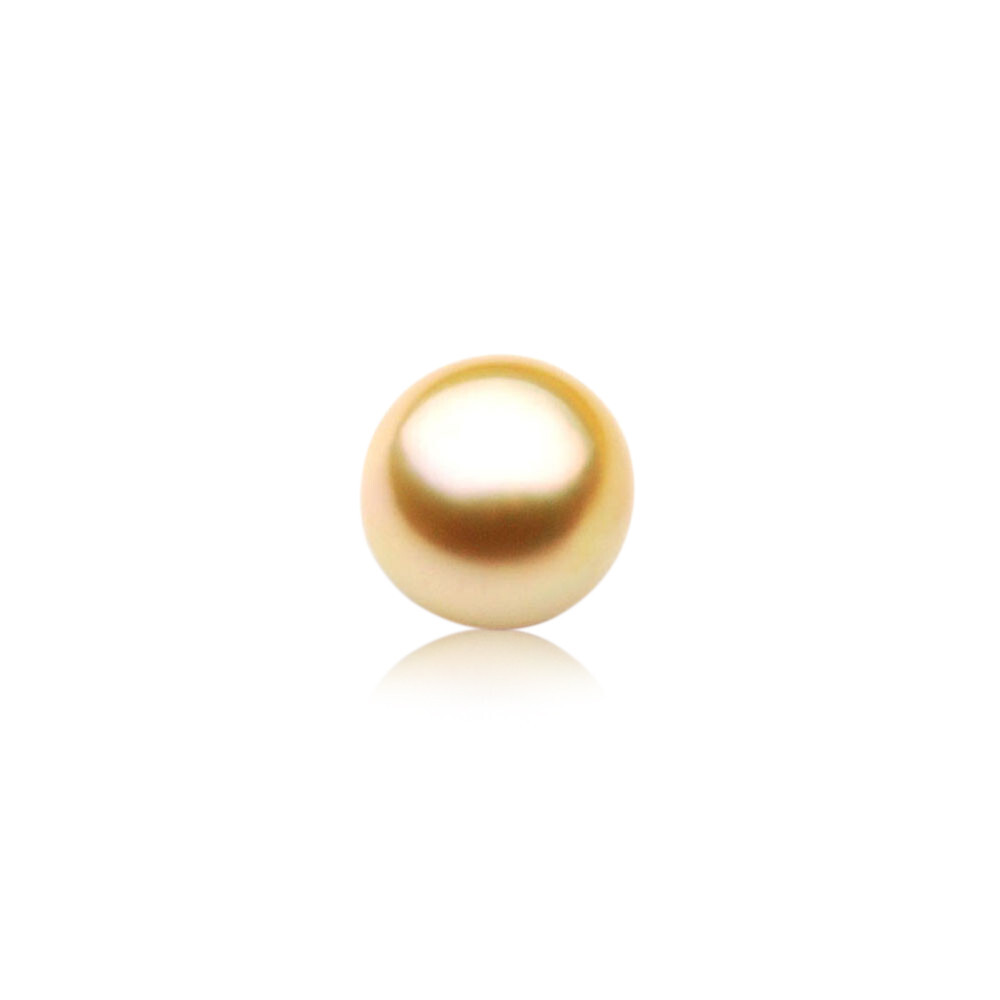
The most important categories include Australian Golden South Sea Loose pearls, Tahitian pearls and freshwater pearls.
Australian South Sea Loose Pearls
Australian South Sea pearls are among the most highly regarded cultured pearls in the world.
They are produced primarily by the Pinctada maxima oyster and are known for their relatively large size and distinctive lustre.
Australian South Sea pearls commonly appear in colours ranging from:
White
Silver-white
Cream
Soft silver
Their larger size makes them particularly suitable for statement jewellery.
A beautiful South Sea loose pearl can work exceptionally well in:
Pearl pendants
Pearl rings
Pearl earrings
Custom jewellery
Special occasion jewellery
South Sea pearls often have a softer, deeper lustre compared with the sharper mirror-like appearance sometimes associated with Akoya pearls.
This gives them a luxurious appearance that many pearl collectors value.
Because they are natural organic gems, small surface characteristics may be present even on high-quality pearls.
Rather than evaluating a pearl based on one characteristic alone, buyers should consider its overall balance of lustre, surface, shape, colour and size.
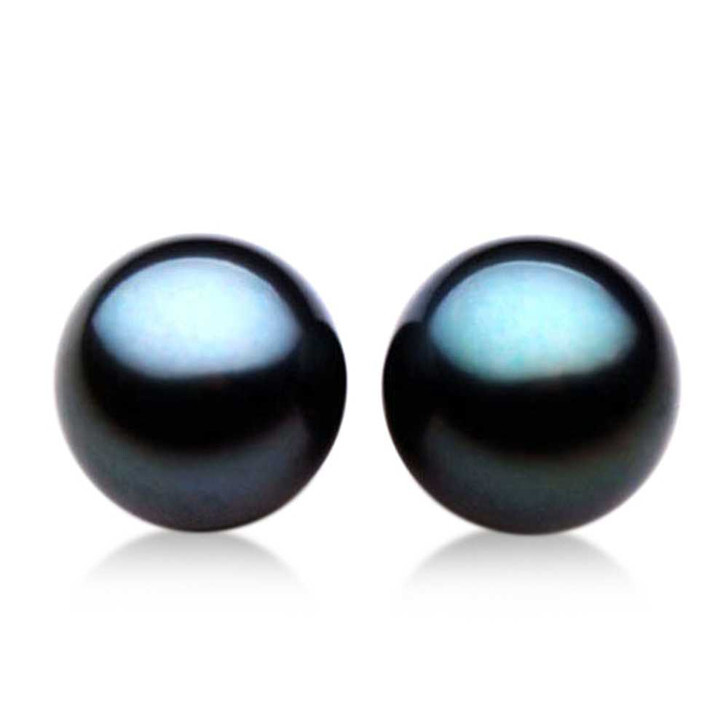
Tahitian pearls are famous for their naturally dark body colours.
Although they are commonly referred to as black pearls, Tahitian pearls are rarely completely black.
Instead, they may display beautiful shades and overtones including:
Dark grey
Silver
Green
Peacock
Blue-green
Aubergine
Charcoal
This natural variation makes Tahitian loose pearls especially appealing to customers looking for jewellery with stronger character.
A single Tahitian pearl can create a striking pendant or ring.
Matching Tahitian pearl pairs can also be used for earrings.
When choosing Tahitian loose pearls, colour is often one of the most personal considerations.
Some buyers prefer very dark pearls with green overtones, while others prefer lighter silver-grey pearls.
There is no single colour that is right for everyone.
The best choice is usually the pearl that appeals most to you visually.
Freshwater pearls offer another versatile choice for custom jewellery.
They are available in a wide variety of:
Shapes
Colours
Sizes
Styles
Modern high-quality freshwater pearls can have impressive lustre and attractive surfaces.
Depending on the pearl, freshwater varieties may be available in traditional round shapes as well as oval, drop, button and baroque forms.
They can be particularly suitable for buyers who want greater design flexibility or who are creating jewellery across different price points.
Freshwater loose pearls can be used in:
Pendants
Rings
Bracelets
Necklaces
Custom jewellery projects
For customers comparing different pearl types, freshwater pearls can provide a beautiful alternative to South Sea and Tahitian pearls.
How to Choose the Best Loose Pearls
There is no single factor that determines whether a pearl is beautiful.
Instead, several characteristics work together.
When comparing loose pearls, consider the following factors.
1. Pearl Lustre
Lustre is one of the most important characteristics of a pearl.
It describes the way light reflects from the pearl's surface and from the layers beneath it.
A pearl with strong lustre may appear bright, lively and almost glowing.
A pearl with weaker lustre may appear flatter or duller.
When comparing two similar pearls, stronger lustre can make a significant difference to their overall appearance.
This is why lustre should usually be one of the first characteristics you evaluate.
2. Pearl Surface
Because pearls are grown naturally inside living molluscs, completely flawless surfaces are uncommon.
Many natural cultured pearls will show some surface characteristics.
These may include:
Small pits
Fine lines
Minor marks
Natural texture
The presence of a small natural mark does not automatically make a pearl unattractive or unsuitable for jewellery.
The location and visibility of the mark are often more important.
For example, a jeweller may be able to position a small surface characteristic toward the back of a pendant or near the setting.
When choosing loose pearls, it is often better to consider the overall beauty of the pearl rather than expecting every natural pearl to have a perfectly flawless surface.
3. Pearl Shape
Pearls come in many shapes.
Some of the most common include:
Round
Near-round
Drop
Oval
Button
Baroque
Round pearls are traditionally highly sought after because perfectly round natural cultured pearls are relatively difficult to produce.
However, shape is also a matter of personal preference.
A drop-shaped pearl can be ideal for pendant or earring designs.
A baroque pearl may have a completely individual appearance that cannot be replicated by another pearl.
The right shape depends largely on the jewellery you want to create.
4. Pearl Size
Pearl size can dramatically change the appearance of finished jewellery.
A smaller pearl may create a delicate, understated look.
A larger pearl can make a stronger statement.
South Sea and Tahitian pearls are particularly well known for their larger sizes.
When choosing a loose pearl, think about both personal preference and the type of jewellery.
For example:
Earrings: Matching size and visual balance are important.
Pendant: A larger pearl can often become the centrepiece of the design.
Ring: Consider both visual impact and how practical the pearl size will be for everyday wear.
There is no universally correct pearl size.
The ideal size is the one that suits the wearer and the intended jewellery design.
5. Pearl Colour
Pearl colour includes both the main body colour and any secondary overtone.
White South Sea pearls, for example, can vary from bright white to softer silver-white or creamy shades.
Tahitian pearls can display a much wider range of darker colours and overtones.
The best colour is not necessarily the rarest or darkest.
It is the colour that works well with the jewellery design, metal colour and personal taste of the wearer.
6. Pearl Matching
If you are buying two loose pearls for earrings, matching becomes especially important.
A well-matched pair should generally look balanced in:
Size
Shape
Colour
Lustre
Overall appearance
Because every pearl is naturally different, finding two pearls that work beautifully together requires careful selection.
They do not necessarily need to be microscopically identical.
What matters is that they appear harmonious when worn together.
Loose Pearls for Earrings
Loose pearl pairs are often purchased for custom pearl earrings.
When choosing pearls for earrings, focus on matching first.
The two pearls should be similar enough that the pair looks balanced when viewed from the front.
Round or near-round pearls are popular for pearl studs.
Drop-shaped pearls may be better suited to elegant drop earrings.
Larger South Sea or Tahitian pearls can create a more dramatic appearance, while smaller freshwater pearls can create a lighter and more delicate design.
Loose Pearls for Pendants
A pendant requires only one main pearl, which gives buyers greater freedom to choose a pearl with individual character.
You may decide to prioritise:
-
Exceptional lustre
-
Larger size
-
Unusual colour
-
Attractive drop shape
-
Unique baroque form
Because a pendant is usually viewed from the front, a jeweller may also be able to position any minor surface characteristic so that the most beautiful side of the pearl faces outward.
Australian South Sea and Tahitian loose pearls are particularly popular for statement pendant designs.
Loose Pearls for Rings
Pearl rings can be visually striking, but choosing the right pearl is important.
Because rings are worn on the hand, the pearl may be exposed to more contact than a pendant or earrings.
A ring design should therefore consider both beauty and practicality.
Round South Sea, Tahitian and freshwater pearls can all be suitable depending on the design.
Pearl jewellery should also be treated carefully because pearls are organic gems and are softer than many gemstones.
Avoid exposing pearl rings unnecessarily to water, chemicals, perfume, cosmetics or hard impacts.
Drilled or Undrilled Loose Pearls?
Loose pearls may be supplied drilled or undrilled depending on their intended use.
Undrilled pearls
An undrilled pearl has not yet had a hole made in it.
This gives a jeweller maximum flexibility regarding how the pearl will eventually be mounted.
Undrilled pearls may be particularly suitable for custom jewellery projects where the final setting has not yet been decided.
Half-drilled pearls
Half-drilled pearls have a hole extending partway into the pearl.
They are often used for:
-
Stud earrings
-
Rings
-
Pendants
A peg from the jewellery setting can be inserted into the drilled section.
Fully drilled pearls
Fully drilled pearls have a hole running through the entire pearl.
These are commonly used for:
-
Necklaces
-
Bracelets
-
Certain earring designs
If you are unsure which type you need, it is worth discussing the planned jewellery design with a jeweller before selecting the pearl.
Are Natural Marks Normal on Loose Pearls?
Yes.
Cultured pearls are created through a biological process, so natural surface characteristics are normal.
Even very high-quality pearls may not be completely free of natural markings.
The important question is how visible those characteristics are and whether they affect the pearl's overall beauty.
A pearl with outstanding lustre and a very small natural mark may be more attractive than a cleaner pearl with weaker lustre.
This is why buying pearls purely according to a grading label can sometimes be misleading.
Whenever possible, consider the pearl's complete appearance.
Understanding Pearl Quality Grades
You may see loose pearls described using grades such as:
-
A
-
AA
-
AA+
-
AAA
However, there is no single universal grading system applied identically by every pearl seller worldwide.
This means buyers should not rely solely on the letters.
Look at the actual characteristics of the pearl, including:
-
Lustre
-
Surface
-
Shape
-
Colour
-
Nacre quality
-
Matching
A trustworthy pearl seller should be able to explain the characteristics behind a particular grade.
Choosing Loose Pearls for Custom Jewellery
One of the most exciting reasons to buy loose pearls is the opportunity to create something unique.
You may choose a pearl first and then design the jewellery around it.
For example, a large white South Sea pearl could become an elegant gold pendant.
A dark Tahitian pearl with green overtones could become a distinctive men's or women's ring.
A matching pair of pearls could become earrings designed specifically for the wearer.
This approach can make jewellery feel more personal because the individual pearl has been selected before the final design is created.
Why Loose Pearls Make Meaningful Gifts
A finished piece of jewellery is already a personal gift.
Choosing a loose pearl and having it made into jewellery can add another layer of meaning.
Instead of simply selecting an existing design, the giver can choose:
-
The pearl type
-
Size
-
Colour
-
Shape
-
Jewellery design
-
Metal
The finished piece can then reflect the person receiving it.
A pearl selected for a mother, partner, daughter, wife, husband or another important person can become more than jewellery.
It can become a reminder of a relationship, a milestone or a particular moment in life.
Buying Loose Pearls in Australia
When buying loose pearls in Australia, look beyond price alone.
Consider whether the seller provides clear information about:
-
Pearl type
-
Size
-
Quality
-
Colour
-
Shape
-
Drilling
-
Return policy
-
Jewellery services
You should also consider the seller's experience with pearls.
A specialist pearl jewellery company may be able to provide more useful guidance when comparing South Sea, Tahitian and freshwater pearls or choosing pearls for custom jewellery.
At Pacific Pearls, our collection includes loose pearls suitable for creating earrings, pendants, rings and other jewellery designs.
Our selection includes different pearl types, sizes, shapes and qualities so customers can choose a pearl that matches their individual preferences.
Frequently Asked Questions About Loose Pearls
Where can I buy loose pearls in Australia?
Loose pearls can be purchased from specialist pearl and jewellery retailers. Look for sellers that clearly identify the pearl type, size, shape and quality and provide transparent return and customer service policies.
What are the best loose pearls?
There is no single best pearl for everyone.
The right pearl depends on your budget, jewellery design and preference for size, colour, shape and lustre.
Australian South Sea pearls are popular for luxury white pearl jewellery, Tahitian pearls are known for natural dark colours, and freshwater pearls offer excellent variety.
Are Australian South Sea pearls valuable?
High-quality Australian South Sea pearls can be valuable because of their size, rarity, nacre characteristics and appearance.
Value varies according to size, shape, lustre, surface, colour and overall quality.
Are Tahitian black pearls naturally black?
Tahitian pearls naturally grow in darker colours, although they are not normally pure black.
They may display grey, silver, green, peacock and other natural overtones.
Can I buy just one pearl?
Yes.
Individual loose pearls are commonly purchased for pendants, rings and custom jewellery.
Can I buy two matching loose pearls for earrings?
Yes.
Matching pearl pairs can be selected for earrings. Matching normally considers size, shape, colour, lustre and overall appearance.
Should I buy drilled or undrilled pearls?
That depends on the jewellery you intend to make.
Undrilled pearls provide maximum flexibility, while half-drilled pearls are commonly used for studs, rings and pendants. Fully drilled pearls are normally used for necklaces and bracelets.
Are surface marks normal on real pearls?
Yes.
Natural cultured pearls can have small surface characteristics because they form inside living molluscs.
A small mark does not necessarily indicate a poor-quality pearl.
How do I choose a pearl for a pendant?
For a pendant, focus on the pearl's front-facing beauty.
Lustre, size, shape and colour are particularly important. Round, drop and baroque pearls can all work beautifully depending on the design.
Find the Right Loose Pearl for Your Jewellery
Choosing loose pearls allows you to start with the gem itself.
Whether you prefer the classic elegance of an Australian South Sea pearl, the distinctive natural colours of a Tahitian black pearl, or the versatility of a freshwater pearl, the right pearl can become the foundation of a beautiful piece of jewellery.
Take time to compare lustre, surface, shape, size and colour rather than judging a pearl by one characteristic alone.
Most importantly, choose a pearl that you genuinely enjoy looking at.
Because every pearl is naturally individual, the pearl you select can become something that is uniquely connected to you or to the person who eventually wears it.
Explore the Pacific Pearls collection of Loose Pearls in Australia, including Australian South Sea, Tahitian and Freshwater loose pearls for earrings, pendants, rings and custom jewellery.